Posts

Improving customer experiences: when WOW! stands for Waste Of Work

In seeking a point of differentiation, the creation of a Wow! moment in the customer experience is an admirable strategy.  But whatever makes us say “Wow!”, what is more likely to be the differentiator is all the basics being done well and consistently.


The reasons why we as consumers switch between companies is rarely because of the absence of anything that “delights and surprises” us.  It’s much more likely to be because of smaller things, the cumulative impact of niggles and gripes that we expect to be done right.10434205_s
It’s easy to see why organisations are seduced into the idea of creating powerful emotional connections;  ones that that drive memories to keep customers coming back, spending more and telling everyone they know to do the same.  However, Wow! moments are not an automatic ticket to differentiation.


For example, when travelling through an airport, my research shows that people simply want them to be clean, friendly, easy and calm.  Only then will we start to worry about self-drop baggage check-ins and architectural aesthestics.  Travelling by train, I just want somewhere to park my car, somewhere to park my backside and some wi-fi.  Pouring billions of pounds into taking 10 minutes off the journey can wait.


So one – or even several – Wow! moments doth not a customer experience make.  Especially, when focusing on the emotive aspects comes at the cost of being functional or easy.  Often it’s because companies use technology for technology’s sake; there are personal agendas at work or there is an obsession with process efficacy and metrics.  The telecoms company I’m with recently provided a perfect example.


I’ve been a customer of theirs for years.  I really like them and their people. They create “fans”, sponsor major events and have an edgy but professional brand. It works and so I rarely have anything contact with them.  Except in the last two days, where I had two different experiences, both of which made me say “Wow!” but for the wrong reasons, based on a lack of the basics.


Firstly, out of contract I wanted to see what my options were before I look around for a new handset and tariff.  On their website, in the phones and tariffs page there is – hidden, well down the page – a “How to buy” number. In the IVR I’m asked for my number and whether or not I’m an existing customer wanting to upgrade.  I am, so assume I’m through to the right place.  Nope.  When I’m connected the agent fumbles around and has to pass me to the “new sales” team.

effort

All I then hear is the noise of a busy office – people chatting loudly to customers and to each other.  Eventually, I hear a timid “Hello?”.  I make my presence known and the agent launches into the prepared script as if that was a perfectly normal way to start.  I go through the request again and ask what the tariffs are for a particular handset.  There’s a long pause, the sound of keyboards being tapped and then I get a confusing deluge of text, megabite and minute options.  I ask the difference between two different handsets.  More clicking and rambling answers.


I’m asked if my account with them really is out of contract.  I thought if anyone should know, they should.  To be certain, he gives me a number to text a keyword to.  We wait with baited breath for a message to come back.  “You ain’t got nuthin’ yet?  Oh, you need to write the keyword in capitals, sorry”.  I try again and again I get nothing back. We struggle on but when he asks if I can call back in 15 minutes my patience runs out.


I know this particular company can do better, a lot better.  We rate customer experiences on three dimensions;  how easy was it, did it do what I set out to achieve and how did it make me feel.  On none of those levels did the company score well at all, the effort amplified by the fact that it should have been so easy.


The next day, coincidentally or not, I received an invitation from them to become part of a customer panel. “Help define our future, we want your thoughts on how we can work better for you” and so on.  It’s nice to be asked, so I clicked the email link to join. I get taken to a pre-qualification web page.  Am I male/female? Date of birth? Which region/postcode do I live in?  All of which they know already, surely. Then I’m asked my household income and nature of my business.  Having gone through all that I then get a message pop up to say they already have too many people like me so they don’t need my views:
response
What a waste of everyone’s time, it didn’t make me feel particularly warm to the brand and I’m curious as to why they would push away someone who is happy to help them. Such is life.
 
I wish those in the board room who sign-off the high-cost Wow! investments that few are asking for could experience the customer journey of the low-cost, invaluable basics being done badly for so many.  These are basic expectations, the bar of which is rising faster than the bar of Wow! expectations.  The irony is that a customer experience with all the basics in place, done well time after time creates more differentiation, more loyalty and itself becomes the “Wow!”.


Jerry Angrave
Founder, Empathyce
+44 (0) 7917 718 072
@Empathyce

Are we talking the right language of customer experience?

Many customer experiences simply happen because when it comes to the attitude and processes, we hear people say “We’ve always done it this way”.  And if it works today, why not?  Well, for a start things could be so much better.  Maybe – and I’ve often seen – things aren’t actually working in the way your customers want.  The consequences of complacency are huge yet that word rarely, if ever, makes an appearance on the “risks and issues” log.

There’s an equally risky parallel in the language of customer experience; the risk being that we have all adopted the phrases and platitudes over time to the extent where if we’re all thinking the same way, having the right and differentiated customer experiences will be so much harder to achieve.  I’ve written before on the need for differentiated experiences from differentiated thinking.

For example, in a workshop where you have people from Operations, Marketing, Sales, Finance and Legal teams, many of them will be seeing this stuff for the first time.  They might be cynical, they might be enthusiastic but they need to hear and understand with absolute clarity the words being used.  Here are some examples, with some suggestions where the vocabulary could be different in order to get people in the right mind-set to bring about better outcomes. They’re not going to become mainstream and you will have your own thoughts, but the idea is to avoid the risk of undifferentiated stakeholder experiences because the language being used internally is itself undifferentiated


Customer Experience or Customer Memorylanguage of customer experience

To talk about “experiences” has become commonplace and inevitably perhaps, it is diluted in its impact.  To those keen to pile in, it suggests that our focus should be mostly just on the “what happens”.  Our thinking becomes limited to the very functional aspects of what we do because that’s the tangible bit.  Yet we know that what affects the likelihood of someone coming back to us next time, spending more more often and telling everyone else, is what they recall when they’re about to do that – their memory about how easy it was and how it made them feel.  Another post looks at that “customer memory” in more depth.


We need a customer journey map for that! or We need a customer story for that!

This often-heard comment in meetings is followed by someone retrieving a linear process map to use as what they see as an acceptable alternative.

To create a customer journey still implies a simple A-B set of interactions but the very use of the word “journey” still suggests a functional, linear approach.  What we need to know and create is the story that a customer will tell someone else.  We’re all people, we’re all customers;  when we do business with a company or go to a restaurant we don’t consciously set out to go on a “journey” but what we then think and talk about in terms of what it was like becomes very much a story.


The end-to-end journey or From last time to this time to next time

Having an end-to-end journey helps fit with the logical side of our thinking.  Conveniently, it also fits the left to right concept that is perpetuated by PowerPoint and Excel.  I’m guilty, I’ve created loads in my time but it still is not reflective of how our customers – or us when we’re going about our daily lives – really think about things.  Maybe we need a pyschologist to really create accurate representations of what it’s like to be a customer.  But while I’m all for keeping things simple, end-to-end still suggests a definitive start and finish point.  If we really want to understand our customers then we need to think way beyond those boundaries.


The voice of the customer or What people think

Talk to a room of people about the “voice of the customer” and there are sage nods and chatter about feedback surveys.  Again though, it risks limiting the understanding of what we’re really driving at here. It’s not just about hearing what our customers are saying, it’s about understanding why people think and feel the way they do.  It’s also not just about sharing what customers think, it’s very much about our own employees too.  After all they are the ones who are making the the experience what it is and are often the ones who know what to fix. However, no-one has listened to them or has acted on what they said because business leaders are focused solely on turning the “voice of the customer” into a higher net promoter score.


I have the privilege of working across a variety of markets with talented people in all sorts of organisations and with an infinite number of challenges.  One common theme though, especially when people are going on their own personal journey of customer experience familiarity is that the language becomes a proxy for leadership of the customer agenda.  Giving it the clarity and relevance it deserves, thinking about it differently to your competitors who are reading text-books and listening to career consultants will give you the differentiation your organisation needs.


Will thinking like a retailer improve customer experiences?

“We need to think like a retailer”.   Really?

In listening to those who are looking to improve customer experiences, I’ve heard two very different opinions from the aviation industry this year on where the aspirations lie.   The airline: “We should think like a retailer who happens to run a fleet of aircraft”.   The airport:  “If you think like an airport you’ll never really understand your customers”.   As a passenger, I know which way of thinking I’d rather be on the receiving end of.024

To those organisations in any industry who aspire to think like a retailer (code for “sell more”), I have a suggestion.  Why stop there?  Why not have the aspiration to make your customer experiences so easy, consistent and cost-effective that it is the retailers who are the ones who look to you and say “We need to think like them”?

One of the biggest challenges we see in creating a truly customer-focused business is the lack of clarity among employees about the overall strategy.  Or, a brand that creates expectations but then has little robust structure to deliver what it promises.  Whatever market we operate in, an aspiration to improve is of course admirable.  But we need confidence in our own business model.  Surely, we don’t want to give our employees the impression that we don’t back ourselves so we’re going to act like someone else.  That message, intended or not, isn’t what will drive the right behaviours and engagement.

It’s a similar risk with searching for and emulating best practices carried out by competitors.  In reality, it’s never that straightforward but if we replicate what they are good at we will, by definition, only be the same as them.  And in today’s world, we need to be different and distinctive.  The bar of expectations is rising relentlessly so yesterday’s best practice quickly becomes today’s norm.  And it’s not always about the “Wow” moments – getting every basic element right every time is, for sure, a best practice that others will aspire too.

I hear a lot about the need to think like a retailer and I applaud the intent.  Retailers have some great experiences but they have a lot of very average ones too.  Yes, they sell stuff and most organisations are looking for ways to increase revenues.  But I’m still firmly of the view that while we can learn from others, it is critical to aspire to get the customer experience right for our own business first.  In doing so, we then become the one that everyone else looks to as the role model.


Differentiated customer experiences require differentiated thinking

Organisations waste time, money and effort if their approach to creating differentiated experiences is based on the very undifferentiated “Let’s walk a mile in our customers’ shoes”.   Inspiration for better and more valuable experiences comes from those who experience things differently.


When teams set out to map customer journeys there’s often a familiar reminder of the need to “Put ourselves in our customers’ shoes”.  Assuming that the journey being mapped is a strategic priority and there is an ability to act on the findings, it’s a concept that’s logical and, to a degree, works.

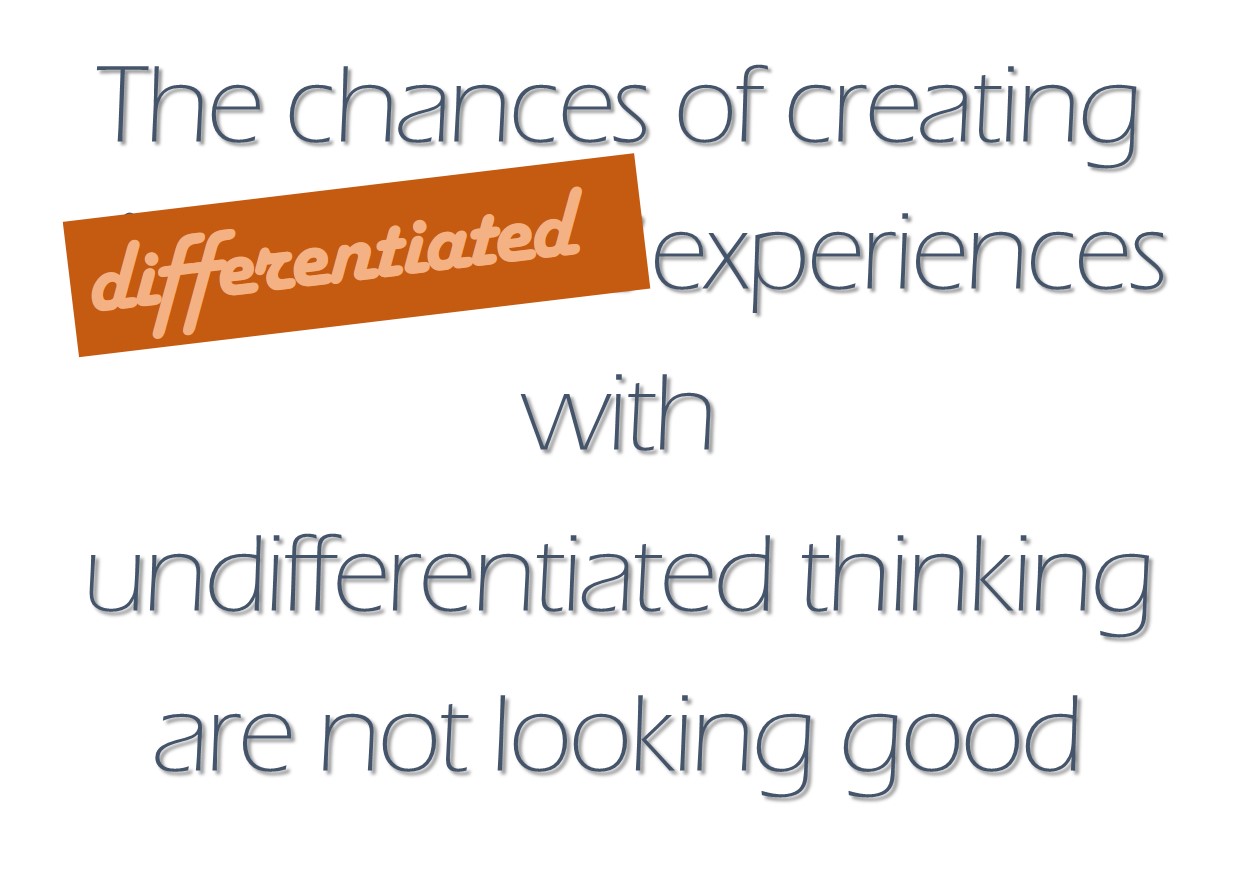
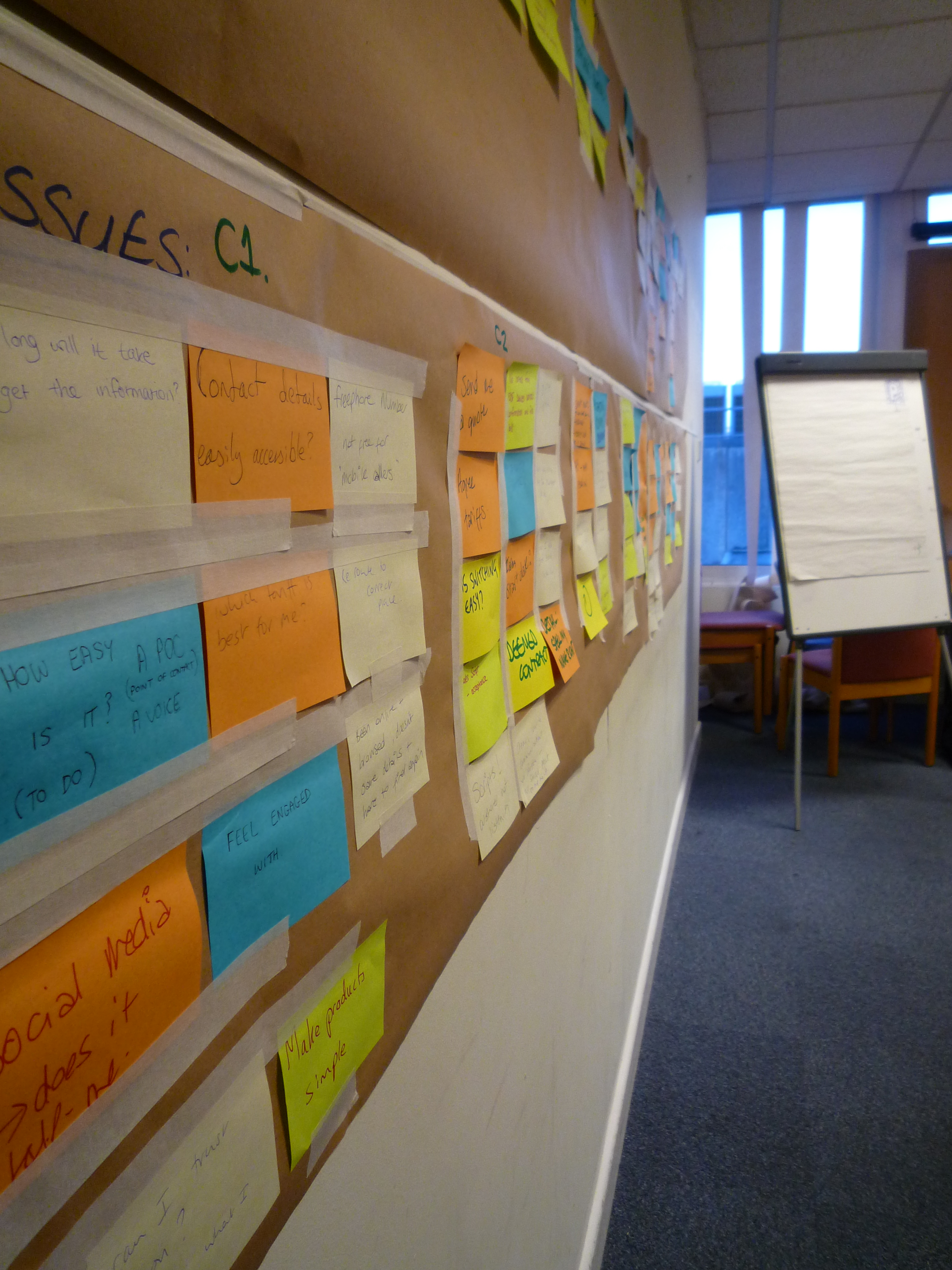
However, that very familiarity is also its Achilles heel.  If we and our competitors are looking at things in the same way, the chances of creating differentiated experiences with undifferentiated thinking are not looking good.  In the journey mapping workshop, everyone nods and agrees that it’s the right thing to do but exactly what it means and why it’s important can get lost in the enthusiasm of being away from the day-job and amid the swarm of post-it notes.WallaceSpace

It’s all good and valid work, but it’s highly likely to produce a sanitised and generic version of the journey.  Putting ourselves in customers’ proverbial shoes cannot tell us what our customers think when they are in their own shoes;  however hard we try, it will still be us pretending to be them.

Even if we create a perfect vision of what the journey should be, by starting with us as a proxy for the customer, by the time any innovation has found its way through the corporate filters of business cases, project scope alignment and demands for “What’s the ROI?”, what were great ideas become diluted.  Had the vision been a little more ambitious and creative to start with, our diluted outcome would be stronger for it.

And so for those who want to take things a step further the approach needs to be stretched.  When we learn to negotiate, if it’s for a 5% budget increase we will probably try starting with +8%.  Swimmers train with weight-belts, motor-cyclists are taught to stay focused on the vanishing point of the road and not to stare at the front tyre.  It’s that thing about reaching the moon by shooting for the stars.

There is one group of people to whom we can turn to for inspiration in so many ways, including here.  They are ordinary human beings who live with some kind of mental or physical condition that we tend to label as having a disability or special needs.

In the UK, over eleven million people have a limiting long-term illness or an impairment of some kind according to the Government. It’s not unreasonable to assume that each of those individuals has at least two people who have been through the emotional highs and lows with them and sacrifice a lot to help them get through their daily lives.  Even if we rounded the numbers and said that 30 million people – nearly half the UK population – are affected, the chances are that we all have such customers. Next time you think a customer is over-reacting to not getting a call back as promised, it might be because they’ve been up all night trying to calm an apoplectic 12-year old who is unable to talk and explain what the problem is.

To help those mapping out customer journeys, adopting the persona of a typical customer type is a step in the right direction.  But, by seeing things from the perspective of someone who interacts with the world in a very different way, it can really sharpen up the process.  Take, for example, a team who wants to make the airport experience better.

The type of hand-drier in the toilets might not seem to be a particular issue.  But for someone with autism, hyper-sensitive emotions and a need for predictability, loud and sudden noises created by the blast from the current wave of dip-your-hand-in driers can at best be deeply distressing.  Creating a situation where your customers run among other customers, screaming and with their hands over their ears is, I’m sure, not an intentional experience. But there’s also a financial impact;  I know people who avoid one major airport for that very reason.

Addressing that particular issue also creates a calmer environment for everyone, something that is high on the list of unprompted things that passengers of all abilities value. Those anxious people who go on a fear of flying course do so because they thought it was the flight, not the airport, that would be stressful.differentiated

Many companies will proclaim they want to make things easy for their customers.  And people will quietly tolerate the niggles of call-centre on-hold messages or staff who close up their shop five minutes before time.  If we’re journey mapping by putting ourselves in our customers’ shoes, those are things we might not be bothered by and so we unintentionally assume our customers won’t either. But, look at it from the perspective of someone with depression, who has taken days if not weeks to build up the courage and mental energy to call only to be told to wait even longer;  the stroke sufferer who wants to ask a simple question but has problems speaking and being understood.  Or, the parent who can’t remember the last night of unbroken sleep, when they last woke up without being woken up and what life was like before washing bedroom walls became a daily task.  Many employees in a call-centre or retail space may not have had the life-experience of interacting with people for whom living independently – or living at all – is a major achievement.  Surely if we made things easy for them, everyone else benefits too.

Another example.  A common gripe is the ability to understand the bills we get, especially from utilities. I was with an energy-company client recently listening to customer calls and had to stifle a chuckle when the exasperated customer declared “I’ve a master’s degree in physics but I don’t understand this bill”.  Imagine then, what it is like if you have any kind of mental disability or a condition such as dyslexia.

Likewise, if a toy gets delivered and it’s the wrong one, do we assume that people will see it as a minor inconvenience and so we’ll be ready when they call up for a replacement.  Or, because we acknowledge that a parent or carer might have to explain that to a distraught child using Makaton sign-language, we fix the process that causes the problem in the first place.

Don’t get me wrong, there are many companies doing small and discrete things that make a big difference.  To provide a balance, Manchester airport publishes a guide specifically for those with disabilities and their carers; Birmingham airport has staff who will recognise signs in body language that suggest something is not right and they’re trained to do something about it. Monarch is replicating the London 2012 Games Makers training for its staff.

There are altruistic and – because of the world we live in – commercial reasons for taking this approach.  But, if we stretch our customer thinking in a different way to our competitors and we design journeys around real people, not the processes we force them through, empathy and ease translates smoothly into a better business for everyone concerned.

Thank you, let me know what you think.  And if you’re interested in helping to improve customer experiences for people with special needs, please join my group over on LinkedIn at https://www.linkedin.com/groups/Improving-Customer-Experiences-People-Special-4583395/about.


For improving customer experiences I’d rather have Right Data than Big Data

On my first day of my first proper job in the UK they called me “New York”.  Not because I was energetic, intriguing or that I never slept but because, when it took me a while to understand what was apparently an hilarious corporate joke, I was – in their words – “five hours behind”.

And many (very many) years later, so it seemed with my understanding of what has been given the label of Big Data.  I see it written about everywhere, something that self-proclaimed experts talk of as the latest critical key to a sustainable business.  However, I seemed to have missed the briefing about what exactly it was and why it was apparently so vital to our future existence.  The cynic in me was muttering about new clothes and Emperors but also part of me didn’t want to miss out, just in case…

Recently then, I was looking forward to catching up with the rest of the world and be able to converse like an insider when it comes to the subject of big data.  Within the space of a week, I had the privilege of chairing a retail analytics event in London and speaking at a conference in Barcelona on creating efficient airports through a focus on customer experience.

What was clear from both is an insatiable appetite for more data.  What is less clear is whether the ability to capture and analyse more and more information is generating the contextual knowledge that businesses need to bring about the change their own business plans demand.

Never before have we had this amount of information available at our fingertips.  True, it means that where once we relied on modelling and forecasting from a small amount of transactional data, we can now reduce the risk by removing the need for so many assumptions.  But does that automatically mean we have the right knowledge to support our business and customer strategy?

For airports, efficiency is everything but that can come dangerously close to putting passengers’ real needs in the blind spot.  Research I’ve carried out shows that customers in an airport put cleanliness, friendly staff and clear signage at the top of the list of the things they value. And yet, they rarely make it to the Exec team’s dashboard.  People do have a choice and they do go to the next airport if their expectations is one of an experience they are no longer prepared to tolerate.

It is unfair to single out airports; many organisations in many markets become (admittedly sometimes unintentionally) very metric-led.  Balanced scorecards thrive on them but it easily drives the wrong behaviours.  Vendors at the airport conference proclaimed that their products offer – and I quote – “first-class passenger processing”.  There was a sense that if it moves it can be processed, if it can be processed we can bar-code and measure it and if it can be measured we can create more metrics to grow our pile of data.

Take, for example, the “How was it for you?” array of good / ok / bad buttons having just gone through airport security.  It’s data in the making but on its own, apart from regulatory reporting, for what real purpose?  If 100% of people hit the red “It was bad” button, how can the airport know what to do differently without any supporting qualitative information?  Depending on how you look at it, while this piece of data adds to the big picture, it is either a costly activity with little return or a missed opportunity as the infrastructure is there anyway.

In the retail world, the amount of transactional information is certainly impressive.  One Turkish supermarket chain had made a huge success of it.  What is worrying though, is the apparent disconnect between all this data and business improvement.  When I asked the retail analytics delegates what value their work adds to the business, there were puzzled looks and absolute silence.  Slightly surprised, I then asked how they would respond if their CEO asked how the data they present helps achieve the business plan.  Eyes down, awkward shuffling and more silence.

Does this mean that in our relentless surge to generate bigger and bigger data because we can, not only are we making it more difficult to sift out the right information but that we’re losing sight of why we’re collecting any information in the first place?

A piece of research just released talked about the gap between companies’ intended customer experience programme and their lack of effective implementation.  One reason may be that the quest to understand everything about everything and to amass oceans of data has overshadowed the importance of having the skills to find the right information and how to be organised to then do something about it.

There was another corporate saying that took me a while to understand.  It was the one about “Don’t boil the ocean”.  We couldn’t anyway back then but metaphorically, maybe now we can.

That said, just because we can, still doesn’t mean we should.


Would changing the name from Customer Experience to Customer Memories make us better prepared?

We have Customer Service;  it’s what companies do to or for their customers.  We have Customer Experience;  you could say it’s what it’s really like to be on the receiving end of the service.  Done the right way though, understanding all that gives us powerful information.

Yet there is also a risk that our focus on the here-and-now can give us a distorted view of the very thing we’re trying to improve;  the likelihood of our best customers coming back, spending more and telling everyone else to do the same.

When we’re about to buy something, it’s basic human behaviour to recall what it was like last time and then to decide whether or not we go ahead or go somewhere else.  We dip into our memory bank to make the right decision, based on what happened back then and what we’ve heard and learnt since then.

But as far as organisations are concerned, I’ve seen that over the last few years the focus has been increasingly on the experience or service that is given to a customer today, more so than the impact that last experience has when it comes to the next purchase.  There are subtle, but important, differences.106

The point is, when we’re about to choose, use, buy or sign-up, it’s our memory that will determine whether we stay “loyal” or we try elsewhere.  Customer advocacy has its place, don’t get me wrong.  But while the wow factors were front of mind when I did that customer survey the day after I last had anything to do with the company, twelve months on I might have a stronger recall of the lacklustre service I’ve had since.

The term “Customer Experience” has served markets very well in raising the bar of how businesses treat their customers.  But internally, organisations have struggled and still do so today with what Customer Experience is.  Is it a new fluffy label from Marketing for what everyone knows as Customer Service?  Or a strategic way of thinking? Absent any real customer-based, cross-functional objectives “We do that already” is a common riposte, along with “It’s too expensive” and “Where’s the benefit?”.

Every organisation has a customer experience whether they know it or not and that may be one of the reasons why it doesn’t get the attention internally that it deserves.  Giving a jolt to the system and talking about influencing Customer Memories demands a different perspective; the future poking a stick at the past.  It’s like asking “What can we do that will increase the chances of you buying again?” instead of “What should we have done that would have prevented you from being really hacked off?”.  A story about horses, gates and bolting comes to mind.

Arguably, the higher the value of the purchase the less frequently we buy and therefore by definition, the time between one purchase and the next can be significant.  I’m no psychologist, but even if it’s a more regular or ad-hoc purchase I know our memories and perceptions change over time.  I might have had a hassle-free experience and at the time was a real fan, but if I’ve since heard other stories or there’s been a change in my circumstances, my attitude or needs may be completely different.  That customer feedback I gave last time is no longer relevant but unless the company asks me again just before I choose next time, they will be acting on the wrong information.

Whether we’re renewing an annual contract, buying a holiday, a car, clothes or using professional services, at that specific point in time the thing that determines what we do next is what our memory tells it was like last time;  not how likely we were to recommend the company to someone else one day after we last did the same thing.

In the name of Customer Experience, organisations understandably have an insatiable appetite to canvas opinions within days, minutes or even as it happens.  That information is used as a proxy for brand strength and to forecast the likelihood of repurchases.  But if that repurchase is weeks, months even years away, how accurate can it be?  It’s obviously easier to ask a customer how it was just after they’ve been in touch as there is a definitive trigger point for feedback.   Just because the timing of the next interaction is harder to predict though, that shouldn’t stop us seeking such valuable information.

It seems to make sense then that we should, in addition or as an alternative, track what a customer feels and thinks much closer to the point at which they make their next decision.  We would still keep the metric-obsessed folk happy with a quantitative score in answer to a question such as “Based on what you remember about last time, are you likely / not sure / unlikely to use us next time?”.

Importantly though, we would also still get the gilt-edged qualitative information about what can be reinforced at that pre-purchase point in time and not afterwards when it might be too late.  And it would still be the case that if we get the experience right, the metrics will look after themselves, not the other way around.

It’s great to see customer strategy and customer experience being discussed in the Board Room.  In the main however, there is still a focus on what customers say just after purchase or the “experience”.  By the time the customer is in a position to make a choice next time, the things that drive that new decision may be very different and are purely in the memory.

And I for one would give ten out of ten for tapping into that.


Whose role is it anyway? The organisational side of Customer Experience

The philosophy behind customer experience has been around since cavemen first traded a club for a spear.  It was simple then, as it is now.  If you didn’t like who you were buying from or you felt they were getting more out of it than you, you’d probably get your own back by inventing the wheel or going to see who’s in the next valley.

Maybe because we’re better at evolution than revolution, many organisations today are shoe-horning that basic concept of customer experience into an existing model.  And while there are companies who regularly get a mention for making us feel good about doing business with them, many more have reinvented that wheel only to have it spinning, making very slow – if any – progress.

There are generally three types of organisational approach to tackling customer experience;  add the responsibility to an existing team, create a new team or have a culture where everybody is accountable.   The benefits of customer experience are buried beneath a duvet of repeated platitudes so I won’t cover those here, but the unintended pitfalls of each are worth a quick look.

Add customer experience to an existing team

Done in the right way it can be highly motivating to be asked to take on more responsibility, especially if it’s to lead and manage something like the customer agenda.  A bigger challenge but a bigger profile too.  Usually, it will be complementary to the role that team already carries out – Marketing, Customer Service or Complaints for example.

But rarely will the existing responsibilities be pegged back and often the measures by which performance will be judged are an extension of what the objectives are already.  The consequence is that while the ambition is there, the reality is that the day-job still takes priority.  At best, the specific skills and way of thinking that are needed to run a customer experience programme evolve from what is there already.  At worst, the team gets a pasting in their performance review because what the CEO expected isn’t delivered.  Rather like their customers’ experiences.

Create a new customer experience team

Surely the watertight answer?  Not always.  For the individuals involved, being part of a new team is exciting in its own right.  Being part of an organisation that is putting its money where its mouth is, even better.  It’s a great opportunity and if – and that’s a big if – the top-level sponsorship is visible and solid, the opportunity to influence others to do the right thing is inspiring.

Yet teams can easily become a victim of their own success if they let it.  The creation of a bespoke go-to resource that is going to lead the customer experience charge carries an inherent danger that others think they are absolved of the responsibility.  That mind-set is exaggerated if performance measures across the organisation don’t change to be in sync either.

Without the right leadership and engagement of peers, the team quickly finds they are picking up everything and anything to do with “customer” on behalf of the business.  They get to handle complaints, they run customer service weeks, they monitor and report on compliance outcomes and they get drawn in to police programmes and projects.

Individuals who are given the customer experience roles from other parts of the business often remain task-oriented, keen to impress and be busy.  So will they have the inclination, confidence or authority to learn specific customer experience skills? To follow what is being said about them and their competitors in social media and to develop reciprocal relationships with internal and external partners based on mutual understandings?  Or will they settle for linear process maps rather customer journeys?  Report to their boss that the call-centre manager won’t carry out a quick survey at the end of calls because it adds to the average handling time metrics?

Strong governance, inclusive of every part of the business from reception desk to board table is the key.  Working to the same priorities that everyone else is, knowing what the latest brand campaign is all about, understanding each other’s challenges – it’s nothing new but its effective adoption by many ranks naively low on the corporate ‘to-do’ list.

Have the right culture

The good news is that whether they know it or not, every organisation already has a customer culture.   The bad news is that it’s not always the right one.  Even worse, some are unable to articulate which it is, good or bad.

In the same way that we shouldn’t need complaints departments, a well-led customer experience department should do itself out of a job.  It’s not a function, it’s a way of thinking and a strategic tool that makes the business more efficient;  driving out duplicated and superfluous costs and focusing resources of the things that matter most to the health of the company and repeat business from more of the most valuable customers.

Delivering on the strategic plan, whether it’s to stabilise, grow or transform a business takes much more than a poster on the wall that proclaims “We put customers at the heart of everything we do!”.

What does the right customer culture look like?  That is up to you, your brand and your leadership style.  But as they say, what’s on the inside gets reflected on the outside.

If your people have little understanding of what the business is doing and why, if they are applauded for following processes rather than doing what’s right for the customer and if they talk about their competitors more than their own brand, then maybe the time is right to step outside.

Join the others looking in, see what they see and do something about it – before they head off to the next valley.

Customer experiences highlight the danger of businesses taking relationships for granted

The sage advice “Don’t bite the hand that feeds you” needs no introduction but it clearly infers that one party is more needy than the other.

It’s a sentiment that’s always been true in a commercial context since the earliest days of trading.  In today’s world though, while the business side is becoming increasingly reliant, the experience they present in search of short-term results can push their customers away rather than bringing them closer.  What’s worse, is that it’s especially magnified – not to say ironic – when the hand that’s doing the feeding has made a commitment, with the inevitable result that the business gets dropped and the customer turns away to move indifferently on.

The very mention of a “relationship” conjures up different meanings to different people yet it is a ubiquitous byword for underpinning success.  Our focus on customer experience, on what it’s really like to do business, is helping to explain why that potential misunderstanding can have serious consequences.Customer Experience vs Customer Service

Let’s be honest, it is really only the organisation that wants or even talks about the proverbial relationship.  The P&L and share price are much more dependent on their customer than the other way around.  At its core, it means that the client simply plays along until a better offer appears or they have reason to suspect a lack of value, trust or respect.

What is intended by one party as a commitment to be in it for the long-haul can be seen by the other as an opportunity to take advantage of, worrying about tomorrow, tomorrow.  Harsh?  Well, customer experience feedback is showing that even where – or because – a client does commit, they are made to feel that the business is a bit too needy, being greedy, embracing the relationship with the grace of a pick-pocketing bear-hug.

Whether necessitated by the economic environment, organisational complacency or driven by the personal short-term agendas of those in charge, there are signs emerging where such conditions serve only to increase the likelihood of a customer choosing an alternative next time, defeating the point of a business creating the relationship in the first place.

To illustrate the point let’s take two examples.

Firstly, legal services.  There are many law firms and other B2B companies who are exemplary at managing their client experiences and will do so for a long time.  There are some however, who, having worked hard to win a new contract, will try to extract as much revenue from that arrangement as quickly as possible because it might not be there in three years when it’s due to be renewed.

Patently, that short-term approach of ignoring what clients really value – things like charging hourly rates for what should be fixed-price work, showing a lack of understanding and having nasty surprises or a lack of information on invoices – is a self-fulfilling prophecy and will actually make sure the client will not renew in three years.  At best there won’t be a happy exchange of testimonials and worse, the client may pull the plug before the contract expires and explain why to all of their contacts.

Secondly, rail operators.  One would think that securing a fixed-term franchise is great news, and it should be.  A foot in the door for all those future contracts too.  But reading passenger reviews of one particular rail company in the UK reveals evidence that one person’s short-term is another’s long-term.  Investors rightly expect a return on their investment but those behind the franchise operators may have tipped the balance in extracting so much jam today that they now risk having no bread and butter tomorrow.

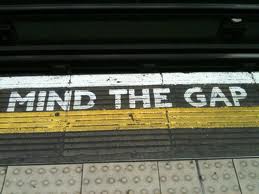
If their trains are filled with more people than there are seats, is it because their passenger experience is so good or because there’s a coach missing as a result of cheaper but longer maintenance schedules?  Or, that they don’t care about charging full price to stand for an hour in a draughty, noisy place?Mind the gap between Service and Experience

For some, the basic but unmet needs of reliability and cleanliness are still objectives and talking points for franchises rather than being the norm.  And, despite broadband wi-fi being available everywhere from my local café to an Airbus A380, we were told yesterday that rail companies in the UK should be able to offer wi-fi by 2019.  I know that’s more of a capital-intensive offering than getting staff to smile but still, 2019?

So, while some operators have fans rather than passengers, why is it that others are failing?  The word on the seats about this one major operator is that service has not improved noticeably since the franchise began – there are still broken doors on carriages and paid-for extras don’t materialise.  Even worried staff are saying everything’s on hold until (if) it is renewed, due in a year.  It’s easy to see how even just an ‘ok’ service then in turn breeds a shared cynicism;  it is also believed, rightly or wrongly, that a key metric in that renewal pitch is on-time arrivals – something that’s easy to achieve high scores on if you’re also in control of the timetable.

We know that with the right experiences, customers will choose to come back next time and it is that – the accumulation of many very short-term affirmations – which gives longevity to what businesses see as the elusive relationship.

So even where a contract, commitment or lack of choice exists, the company being fed would do well to act as if there is no long-term nature, no assumption about next time.

Their customers don’t make rash assumptions or see it that way;  what they do see is that on the other end of the hand that is doing the feeding they also have a pair of legs, ready to run at the first sign of a bite to a more appreciative recipient…

Luxury or productivity? The question of value for Business Aviation’s customer experience.

FBOs and charter airlines are in a strong position to capitalise on the belt-tightening consequences of recent economic conditions.  That’s providing they are able to articulate their value in a meaningful way. 

Value, to paraphrase, is in the eye of the beholder. Understanding what that means in reality and then being organised to do something about it puts companies on track for that competitive edge and long-term growth and stability they need.

Focusing on customers is nothing new.  In designing and implement customer strategies, there’s no shortage of advice on why that’s a good thing.  But the piece that’s often missing is how to use it in a way that creates real business benefits.

Here are some tips that go some way to plugging the gaps.

Customer journey mapping

“We need a customer journey map for that” is a common call that’s heard in workshops aiming to lift the levels of customer service.  Unfortunately, what gets put on the table is just as often a linear process map, an operations manual or a sales checklist.  They give a starting point but little in the way of direction.

A good journey map is itself a means to an end.  It will give everyone a common version of what it’s really like to be a customer.   It points to where effort and resource needs to be focused and it provides others across the business with critical information about how best to achieve their own individual goals.  Most importantly though, it forms the platform of knowledge on which future decision-making is based.

It is therefore the output and what is done with it that counts. There’s no golden rule about what the map should look like, it must simply work for your organisation in a credible way that tells the story of what the opportunities are and why.  The tighter the scope the better.  For example, a forensic look at the tablet-based booking process for a high-value, regular customer or the welcome experience for a new-to-business-aviation client will yield more actionable and effective insight than a one-size-fits-all approach.

Understanding the customer’s perception of what happens every step of the way, set against what should happen and what drives value for the business, will flush out detailed commercial considerations.  What does good look like?  How do we compare? What does this customer (or customer type) really value and how well do we do it?  What are the unintended consequences? If we’re over-delivering in an area that the customer doesn’t see as a priority, can we save costs there?   And so on.

With robust leadership and governance, the journey map makes sure the right activity is prioritised, the right people are held to account and the right measurement programme is in place to perpetuate improvements.

Wanted: to know what our customers tell each other that they don’t tell us

Today’s customers will sit down to dinner tonight with family or colleagues and share a story or two about their flight(s).  It would be great to be a fly on the wall but with the journey mapping having created pre-meditated and dependable experiences, when the chairman asks if we know what they are saying not only can we answer “yes”, but we can also articulate how that is adding value to the business.

Commercial benefits

Business aviation is no different from many other markets in that standing out from the crowd is increasingly as difficult as it is necessary.  But for those who place a spotlight on getting things right, the commercial benefits are as much non-financial as they are financial.

Collecting first-hand evidence of what works for customers and their own internal stakeholders back at their office shapes strategic as well as tactical decisions.  It means the weaknesses and inflexibility of commercial aviation alternatives can be articulated to best effect. It helps recognise how much competitors might include video conferencing.  It flushes out how customers want to pay and reveals insights for lobbying airport owners and regulatory policy makers.  Such knowledge also ensures all activity across the company is working to the same priorities and that marketing investment isn’t wasted when something other than the brand promise is delivered.

While business aviation has to navigate around a plethora of political, regulatory and infrastructure issues, it also wrestles with the issue of perception.  For many clients, the economic climate has put cost management at the top of their agenda yet brands and communications targeting corporate accounts still ooze indulgence rather than productivity advantages.  That’s fine if the chosen target market is the luxury seeker, but a sceptical programme director overseeing an urgent M&A project will only let the team fly privately if the broader economic benefits for the business case are clear.  Therefore, getting to understand the customer and their own organisation is essential for business aviation companies who can then provide the right information that makes that business case uncontested.

Diverting finite resources for an even greater customer focus might take some persuading for metric-driven stakeholders.  The translation therefore of customer measurements such as the net promoter score (NPS) and of customers’ emotionally-driven behaviour into real money makes the case forcefully.

Medallia’s research into NPS – the popular measurement tool which asks customers how likely they are to recommend your business – shows that on average, those who are willing to be an advocate are worth 30% more than those who are not.  The Temkin Group also showed that promoters are five times more likely to repurchase than detractors.

A joint piece of research between Forrester and Watermark Consulting tracked the correlation between organisations that had a customer experience focus and their stock-market performance.  In that five-year period, the S&P 500 market index dropped by -1.5%; companies on the front foot with customer engagement increased by +22% while those dragging their feet fell by 46%.

Traits of successful FBOs and charter airlines

Somewhat unhelpfully, successful FBOs and charter airlines come in all shapes and sizes.  Some brands make a feature of being loud and brash while others go about their business quietly, but very effectively, keeping well under the radar.

The one thing they all have in common is good people.  Flat fee options, in-flight connectivity that replicates being in the office and a highly responsive service will count for nothing without the right people. They understand what the company is all about, they know what it needs to do day-in and day-out to succeed and they are energised to accomplish at least that on a daily basis.

Steve Jones, Managing Director, Marshall Aerospace said of their success: “In the last year it’s all been about accumulating a strong team and so far it has been more about building expertise than building things”

Thomas Flohr, Chairman of VistaJet which regularly has 20-25% revenue growth, bypasses the fractional model – “We tore up all the old conventions and designed a revolutionary business model focused entirely around our clients. What they wanted. What they needed. We’ve never looked back.”

And earlier this year, Rizon Jet said that its awards were due to a “Dedication to fantastic customer service….it’s not just the facility, but the people that make the difference”.

Organic business growth

Organic business growth

A further illustration of how customer service can trump price came in the AIN FBO survey – Americas 2013.  Customers were asked to cite the most important factors when choosing an FBO:  85% said good customer service, the top answer.  And the top reason for avoiding an FBO? 71% said poor customer service.

Another common factor of successful businesses is having the right customer feedback programme.  In X-Jet’s own words, “Truly we do live for that con­nection with the customers and we’re constantly seeking feedback on how we can do things better”

Lessons from other industries

Markets outside business aviation are also finding that the bar of expectation is rising all the time. As law firms are discovering to their cost, the world around them has changed and in their clients own lives they are interacting more and more effortlessly with a host of other organisations through an array of devices and channels.

Apple is a regular contender for exemplary customer service.  That’s not surprising with the focus it has on recruiting the right people for its brand, the focus it has on customer empathy rather than selling and on evoking the right emotions.

In March this year, Marriott headed the Temkin Group rankings once again for a hotel brand’s customer experience.  Like Amazon and NetFlix, they create relevant personalisation and make it easy to do business with.  They focus on the things their customer value, whether it’s helping the procurement team choose Marriott over a cheaper alternative down the street or tracking down lost luggage.

Many of these results stem from having (read: “allowing”) its people talk directly with customers.  These organisations also have strong leadership for a clear customer strategy that is shared and understood by every employee.

Conclusion

Companies in the business aviation market are not on their own in needing to articulate their real value to existing and new customers.  But for those who get it right, delivering what is valued most and what is seen as value for money, customers will reflect that they made the right decision, their organisation will benefit and they’ll tell everyone.  And that’s invaluable.

Customer Experience at the Board table: a voice, a vote or a veto?

Everyone seems agreed that, like the complaints department, in theory the real aim of an in-house customer experience team should be to do itself out of a role.

I say that because if every decision made by an organisation strikes the right balance between what its customers value and what drives the corporate value, then there is no need for anyone to champion its cause.  It’ll just happen.  It’ll just be the way things are done.

Until then however, those leading and managing the customer agenda need the skills and credibility to get people talking to each other, to demonstrate unequivocal proof that customer experience doesn’t leave money on the table and to be accountable for ensuring that the right things are being done in the right order.  Not only does that have to happen across the width of a multi-functional structure but from the very top down.

Recent corporate evolution has seen Boards grow more upright Evolution of Progressas they respond to what’s going on around them and the discovery of how interdependent the executive team is.  The finance chief, risk head and company secretary have pretty much always been at the top table; HR took its place when team-building and balanced scorecards came of age along with the decentralisation of its core services;  to keep up with Sales, the Operations and Marketing divisions then were invited in.  And more recently, general counsel – traditionally the gatekeepers at the end of the corridor – are being brought much closer in to the running of the business.

As a result, for a customer experience leader there is intense competition around the Board table for attention, time and resources.  But it is essential for that person to be able to go toe-to-toe with everyone in the senior team; not because they want to win their argument and look important but because they will genuinely have customer insights that will make the decision-making process more effective.  Of course, there will be personal agendas all around the table as individuals try to be seen exerting their influence on cash-flow.  However, predicting the commercial impact of customer behaviour based on what the corporate strategy needs can align and prioritise decisions as well as take out costs that are duplicated or that are not valued.  Absent that guidance and customer strategy, the risks and unintended consequences quickly turn into unnecessary but costly issues.

Having a voice that is heard and listened to is a great start and a large number of companies are heading down that path.  Going a step further is having a vote, helping to ensure that things are done for the right reasons and that at the very least, the real-world customer impact has been given due consideration.

But better still, is for those in charge of ‘customer experience’, whatever the size of team, to have the right of veto on decisions that affect customers directly or indirectly – for the organisation’s own long-term good.  There are few people who work right across every function and who also have the opportunity to be the one who gets them all in the same place.  Even fewer know what shutterstock_87641005it’s really like to be one of their own customers and how that affects what they do next time.  That knowledge needs to be used to its full competitive advantage.

Having a unilateral right of veto might seem a bit extreme but if we are all agreed that in an ideal world a customer experience team would not be needed, that is effectively what the organisation would evolve to do, naturally and instinctively.